

Ceramic filter plate blockage can be efficiently restored to permeability through physical cleaning, chemical cleaning, and combined cleaning methods. The key lies in timely handling and selecting a cleaning solution that matches the properties of the blockage.
When the ceramic filter plate has poor suction effect or even no suction, clogging is one of the most fatal reasons. If the backwash water pressure is normal (0.08-0.12MPa) but cleaning is ineffective, it indicates that the micropores have been deeply blocked and deeper cleaning measures need to be taken. The following are systematic cleaning methods and operational recommendations:
1、 Conventional backwashing: preventive maintenance to prevent accumulation of blockages
Backflush cleaning is a fundamental step that must be performed every cycle to remove surface particles and loose deposits.
Backwash pressure: Maintain at 0.08-0.12MPa. If it is lower than 0.05MPa, flushing is ineffective and the filter element should be checked for blockage.
Frequency: Automatically performed after each filtering cycle for 2-5 seconds.
Attention: Regularly check the pressure difference before and after backwashing the filter. When the pressure difference is greater than 0.1MPa, the filter element should be replaced in a timely manner.
Tip: Although backwashing cannot completely remove stubborn dirt, it can significantly delay the clogging speed and is a prerequisite for maintaining long-term operational efficiency.
2、 Joint cleaning (recommended solution): physical and chemical synergy to remove blockages
Joint cleaning is the core method to solve moderate to severe blockages, combining ultrasonic vibration and acid washing to achieve deep dredging of micropores.
Cleaning cycle: Stop and clean for 1 hour every 8 hours of continuous operation, which is the standard operating procedure.
Cleaning process:
Emptying the slurry, flushing the tank and filter plate gaps;
Inject clean water to submerge the ultrasonic oscillator box;
Start backwashing (pressure 0.08-0.12MPa);
Add acid solution (such as nitric acid pH 2-4) and turn on the acid pump;
Combined ultrasonic cleaning for 50-60 minutes.
3、 Pickling agent selection: precise matching based on the type of blockage
Different compositions of acid solutions are suitable for different types of sediments, and selecting the wrong one may damage the filter plate or be ineffective.
Table:
Suggested precautions for concentration in applicable scenarios of acid solution types
Nitrate metal sulfides, mineral derivatives, and other stubborn stains with a cleaning power of 1-3%, strong but corrosive, soaking for no more than 30 minutes
Oxalate rust deposits, calcium and magnesium scaling 2-3%, combined with a soft bristled brush for better physical cleaning effect
Citric acid is suitable for daily maintenance and high environmental requirements scenarios with 5-8% mild properties, making it suitable for frequent cleaning
Industry trend: More and more companies are using environmentally friendly cleaning agents instead of traditional nitric acid, such as Hefei Huaqing Ceramic Filter Plate Cleaning Agent or Goldwell ® WT-24H, It has the advantages of no volatilization, no corrosion, and easy degradation, and the permeability after cleaning can reach over 90% of the new board.
4、 Deep regeneration treatment: for old or severely clogged filter plates
When conventional cleaning is ineffective, the following reinforcement measures can be taken:
Dismantling soaking method: Remove the ceramic plate with uneven or ineffective slurry absorption, and soak it in oxalic acid or special cleaning agent under constant temperature conditions for 1-2 hours.
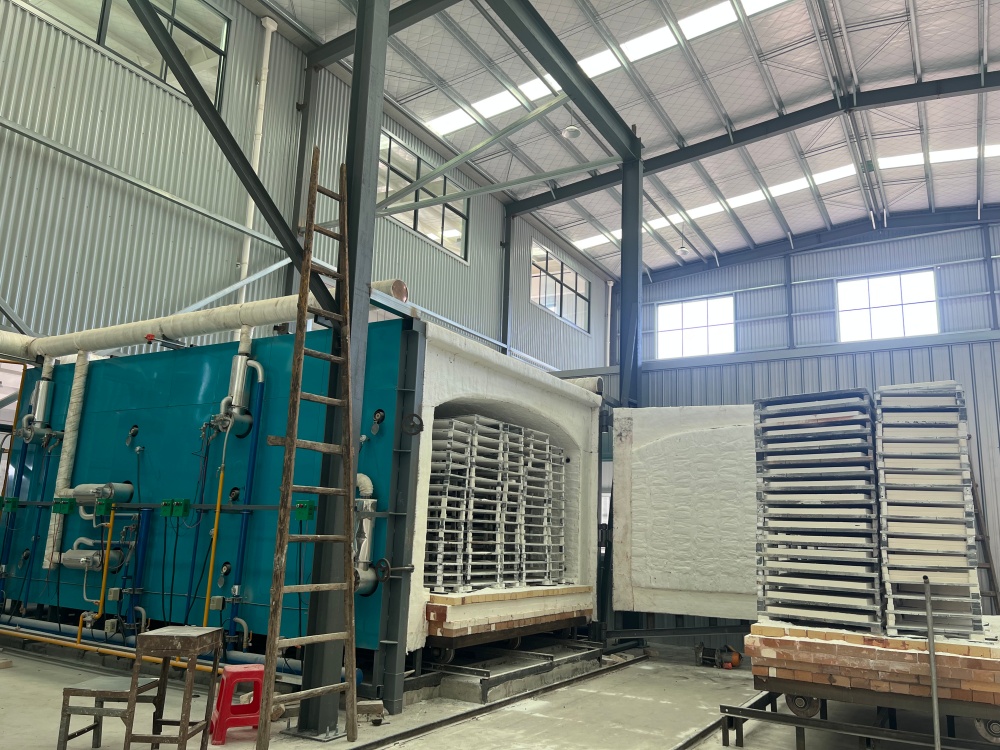
High temperature burning method: suitable for organic blockage, removing carbonaceous residues by high-temperature burning (temperature control is required to avoid ceramic cracking).
Scrap replacement: If there is still no improvement after strengthening cleaning, it indicates that the service life is approaching. The entire set should be replaced in a timely manner to avoid performance imbalance caused by mixing old and new.
5、 Cleaning Effect Verification Standards
After cleaning, the following indicators should be used to determine whether it meets the standards:
Micropore permeability: Under air back blowing test, the filter pores bubble uniformly at a pressure of 0.05-0.1MPa;
Filtrate quality: visually clear and colorless, suspended solids ≤ 0.08mg/L;
Filter cake moisture: below 9-10%, indicating the recovery of dehydration function.