

The common material choices for ceramic friction rings include 99% alumina ceramics, silicon carbide ceramics, and silicon nitride ceramics. Different materials are suitable for different working conditions, and the core differences are reflected in hardness, wear resistance, corrosion resistance, and impact resistance.
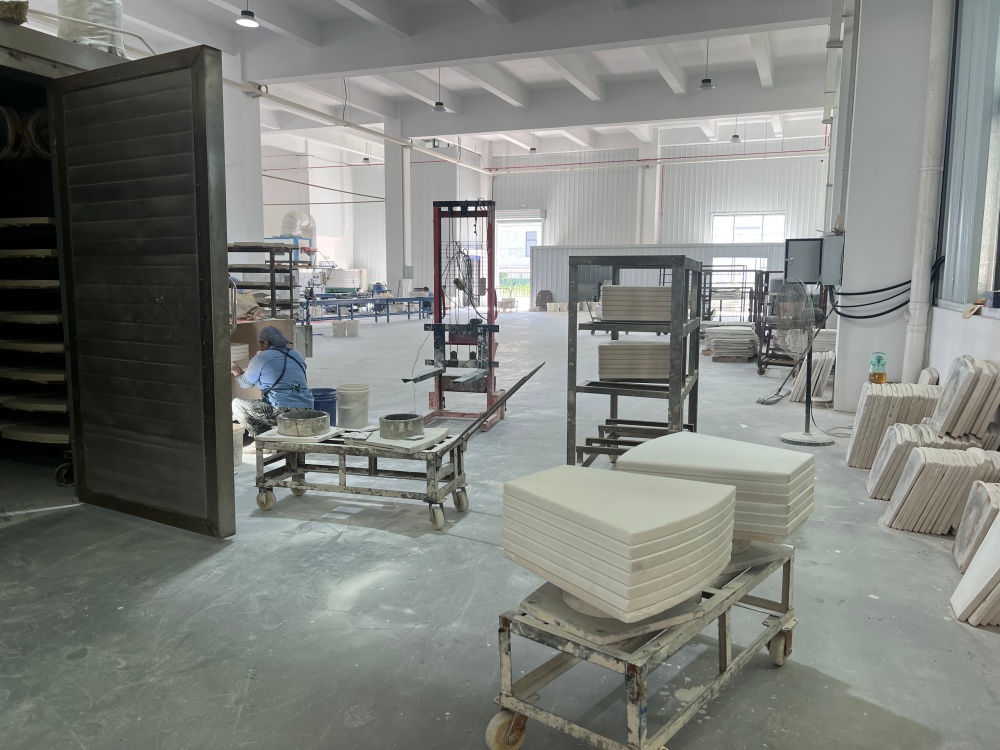
Reasonable selection of materials based on the operating environment of the equipment (such as temperature, corrosiveness, load fluctuations, etc.) can significantly extend the service life of the friction ring and improve sealing stability. The following is a detailed comparison of three mainstream materials:
1. 99% alumina ceramic (Al ₂ O ∝)
Features: Moderate cost, high hardness (Vickers hardness HV1000-1200), good wear resistance, and strong insulation.
Applicable scenarios: Universal working conditions, suitable for environments with moderate wear, no strong corrosion or high temperature requirements, such as ordinary mine dewatering and ceramic sludge treatment.
Advantages: High cost-effectiveness, high processing accuracy, surface smoothness up to Ra ≤ 0.03, suitable for precision fitting.
Limitations: High brittleness, weak impact resistance, not suitable for equipment with frequent start stop or high vibration.
Recommended for use in small and medium-sized ceramic vacuum filters, with stable operation and regular maintenance cycles.
2. Silicon carbide ceramics (SiC)
Features: Extremely high hardness (second only to diamond), bending strength of 600-800MPa, high thermal conductivity, temperature resistance up to 1400 ℃, excellent chemical stability.
Applicable scenarios: high temperature, strong corrosion, high wear conditions, such as chemical waste dehydration, acid and alkali slurry treatment, and metallurgical leaching residue filtration.
Advantages: Strong corrosion resistance, almost unaffected by acid and alkali erosion; Low thermal expansion coefficient, good thermal shock resistance; The service life can reach more than 3 years.
Limitations: High cost, difficult processing, high requirements for the material of the grinding parts (matching high-purity graphite or ceramic static plates).
Recommended for high-end models such as Lianyungang Boyun and Gree, for long-term continuous operation projects.
3. Silicon nitride ceramics (Si ∝ N ₄)
Features: It combines high strength and toughness, with better impact resistance than alumina and silicon carbide, low density, and high fatigue toughness.
Applicable scenarios: working conditions with large load fluctuations, frequent start stop, and mechanical impact, such as intermittent operations in large beneficiation plants and high dynamic load systems.
Advantages: The fracture toughness can reach 6-8 MPa · m ¹/², and it can withstand sudden stress impacts; Maintain good mechanical properties below 1200 ℃.
Limitations: Expensive price, mostly used for special customized equipment, with a lower penetration rate than the first two.