

Among common ceramic friction ring materials, silicon carbide ceramics (SiC) typically have the longest lifespan, especially under high temperature, strong corrosion, and high wear conditions, with a service life of over 3 years, significantly better than alumina and silicon nitride ceramics.
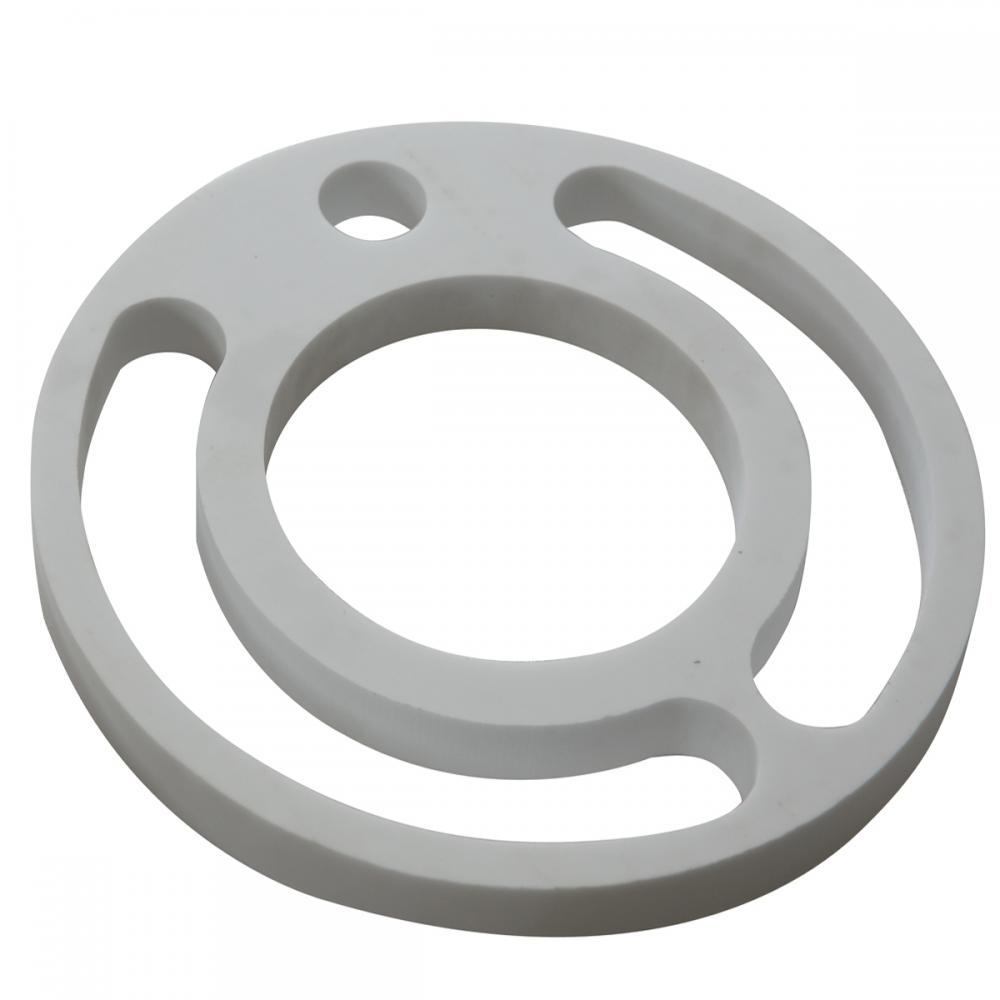
This is due to the extremely high hardness, excellent wear resistance, outstanding chemical stability, and good thermal conductivity of silicon carbide, which enables it to maintain stable sealing performance and structural integrity even in extreme environments.
Comparative analysis of the lifespan of three mainstream materials:
1. Silicon carbide ceramics (SiC) - the preferred choice for ultra long lifespan
Typical lifespan: 3-5 years (continuous operation condition)
Core advantages:
The Vickers hardness is as high as HV2500-3200, second only to diamond, and it has extremely strong resistance to abrasive wear.
Excellent corrosion resistance, able to resist almost all chemical media such as boiling nitric acid, aqua regia, strong alkali, etc.
High thermal conductivity (about 80-130 W/m · K) can quickly dissipate frictional heat, preventing thermal cracking or ablation caused by local overheating.
Low thermal expansion coefficient, good thermal shock resistance, suitable for systems with frequent start stop or large temperature fluctuations.
Applicable scenarios: harsh working conditions such as chemical, metallurgical, and high salt wastewater treatment.
2. Silicon nitride ceramics (Si ∝ N ₄) - a choice for high toughness and long lifespan
Typical lifespan: 2.5 to 4 years
Core advantages:
High fracture toughness (6-8 MPa · m ¹/²), better impact resistance than silicon carbide and alumina, suitable for dynamic systems with large load fluctuations.
Maintaining high strength and long fatigue life below 1200 ℃.
Good self-lubricating properties, low friction coefficient, and reduced wear on worn parts.
Limitations: High cost, difficult processing, low popularity.
Applicable scenarios: Intermittent operations in large mines, high vibration equipment.
3. 99% alumina ceramic (Al ₂ O ∝) - economical medium life
Typical lifespan: 1.5 to 3 years
Core advantages:
Low cost, high processing accuracy, surface smoothness up to Ra ≤ 0.03, suitable for precision sealing.
High hardness (HV1000-1200) and better wear resistance than metal materials.
Limitations: high brittleness, poor impact resistance, not resistant to strong alkali and high temperature thermal shock.
Applicable scenarios: Universal ceramic vacuum filter, running smoothly for small and medium-sized projects.